PRINCIPIA · THEOREM
Transitivity of similarity
Dependencies: AA similarity (provides the working definition of "similar": corresponding angles equal and corresponding sides in proportion).
Statement
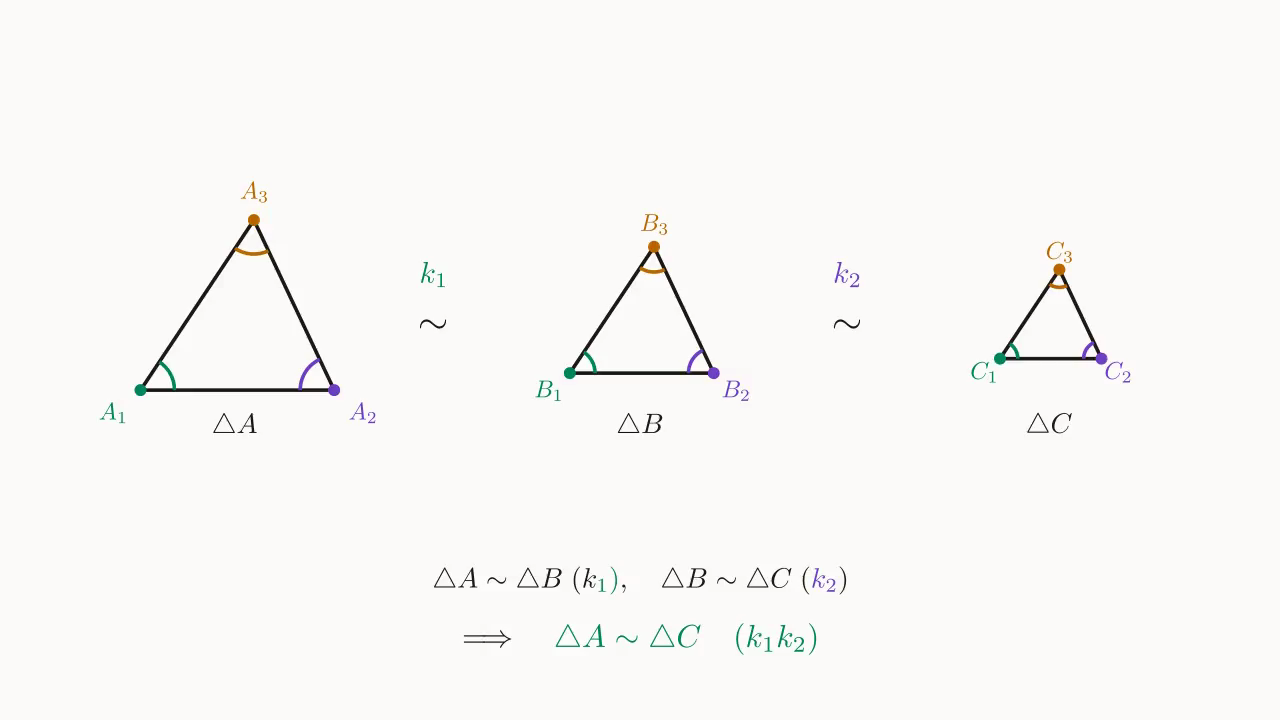
Let , , be three triangles. If
then
In other words, the similarity relation is transitive: two layers of similarity can be "stacked" into one, with similarity ratios multiplying.
10 foundational theorems free · one-time unlock for the rest
Unlock the complete proofs forever
Matching GeoSnap, 10 foundational theorems are completely free. Unlock every other proof, animation, and consequence with one $10 purchase.
Sign in to unlockHelp me make this theorem better